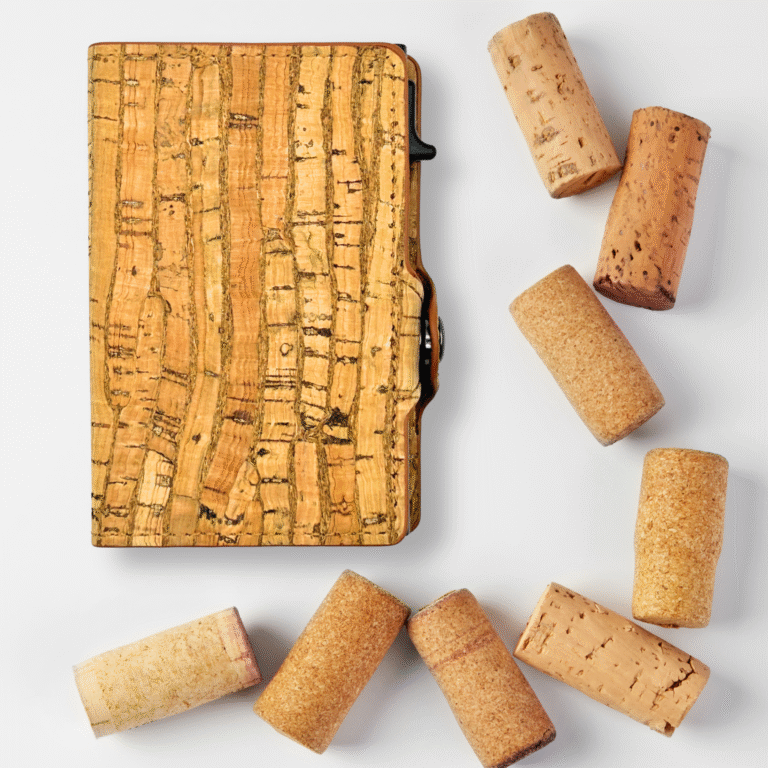
A well-made cork bag lasts five to ten years of daily use, and longer if you are reasonably kind to it. That is the short answer. The longer one is more interesting, because cork behaves differently from leather in ways that are easy to miss until you have carried one for a while.
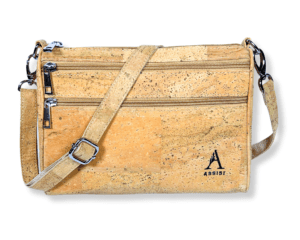
How long a cork bag actually lasts
Cork fabric is not the same material as a wine stopper. It is made from premium cork bark shaved into thin sheets and bonded to a fabric backing, and its strength comes from its structure: millions of tiny air-filled cells that compress and spring back rather than creasing and splitting.
In practice that means three things you will notice.
- Scratches don’t show. Cork’s surface is forgiving in a way smooth leather isn’t, so a bag that lives at the bottom of another bag still looks presentable.
- It holds its shape. Cork bags don’t slump or go shapeless the way an unlined fabric bag does, even carried every day.
- It softens rather than cracks. Cork loosens up with handling and darkens a little. It doesn’t dry out and split the way untreated leather can.
The limits are worth knowing too. Cork will mark if you drag it across something sharp, and the seams are the part that gives first, as they are on any bag. Neither is a reason to baby it, but they are the two things that decide whether you get five years or ten.
Are cork bags waterproof?
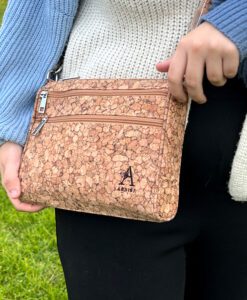
No, and it’s worth being precise about this, because the word gets used loosely. Cork is water-resistant, not waterproof.
The bark is coated in suberin, a natural waxy substance that repels water at a cellular level. It’s the reason cork was used to seal wine bottles in the first place. In daily terms:
- Caught in a shower, your things stay dry and the bag wipes off with a cloth.
- Spills bead rather than soak in, so there’s no rush to blot.
- Nothing needs proofing sprays or reproofing, unlike waxed cotton or untreated leather.
What it won’t do is survive being submerged, or a sustained downpour with nowhere to shelter. Given long enough, water finds the seams. For a British autumn, that’s rarely the situation you’re in.
What about cork wallets and purses?
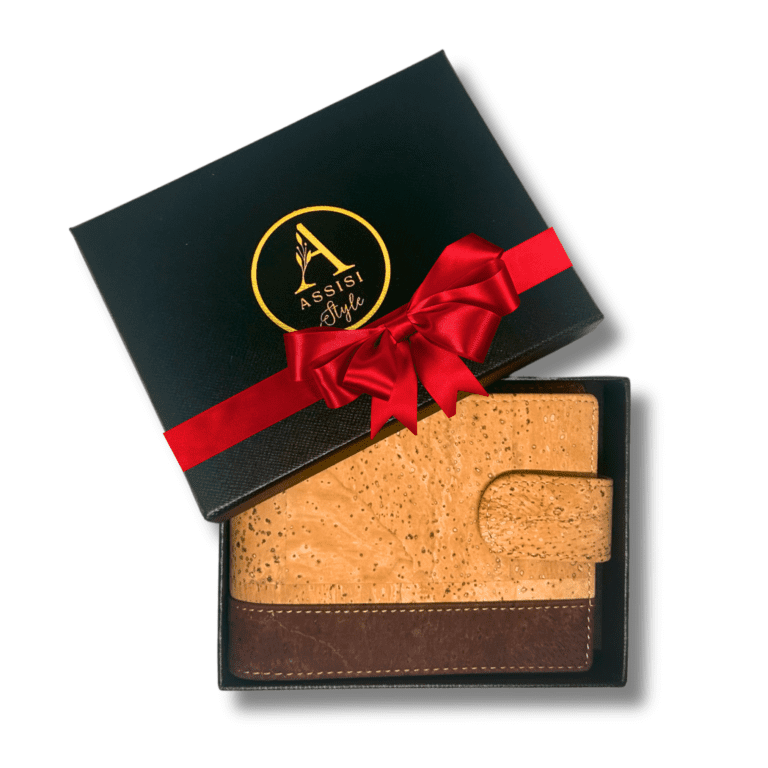
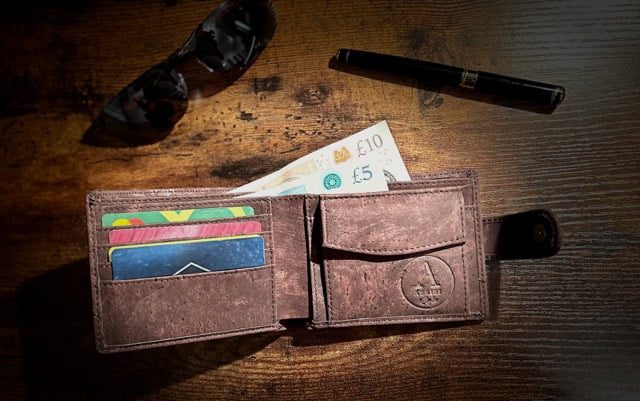
Everything above applies, and smaller items tend to outlast bags for a simple reason: they take less abuse. A wallet lives in a pocket, a bag gets put down on pavements. If you’re weighing up cork wallets or card holders, the material behaves exactly the same way. It just has an easier life. The one most people settle on is the black cork bifold wallet, with RFID blocking and a coin pocket. We go into the material itself in more depth in our guide to cork leather, and there’s a closer look at the slimline option in our write-up of the cork card holder wallet.
Where cork comes from
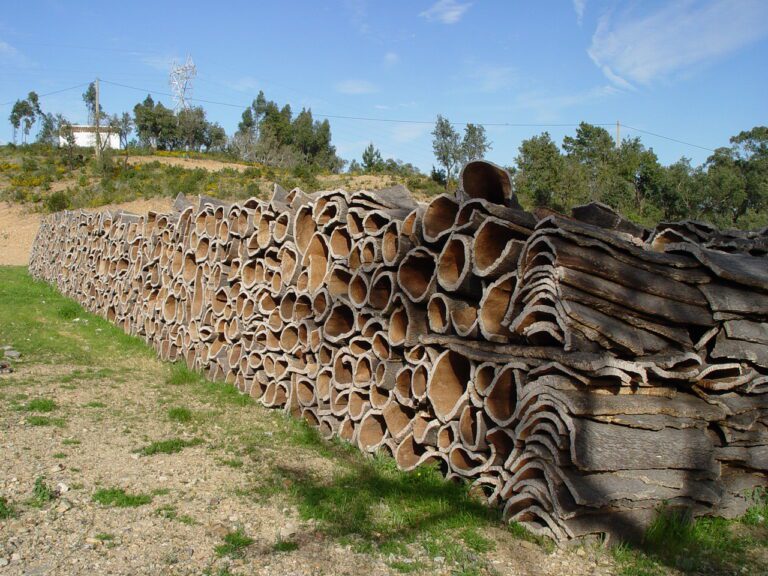
Almost all commercial cork comes from the cork oak forests of Portugal and Spain, with Portugal alone supplying roughly half the world’s supply. The bark is stripped by hand from living trees in summer. The tree stays standing and grows its bark back over the following nine years or so, and can be harvested around fifteen times across a life of up to two centuries.
That cycle is why cork’s environmental case is unusually solid:
- No tree is felled. Portugal protects cork oaks by law. You can’t legally cut one down without permission.
- Harvesting increases carbon absorption. A stripped tree takes up more CO2 than an unstripped one, because it goes into accelerated regrowth to replace its bark.
How to get ten years rather than five
Nothing elaborate is required.
- Wipe with a damp cloth and a little mild soap when it needs it. No solvents, and no leather conditioner, which cork doesn’t want.
- Let it dry away from radiators and direct sun.
- Don’t overload it. Strain on the seams is what ends a bag’s life, not wear on the cork.
- Store it loosely rather than crushed under other bags.
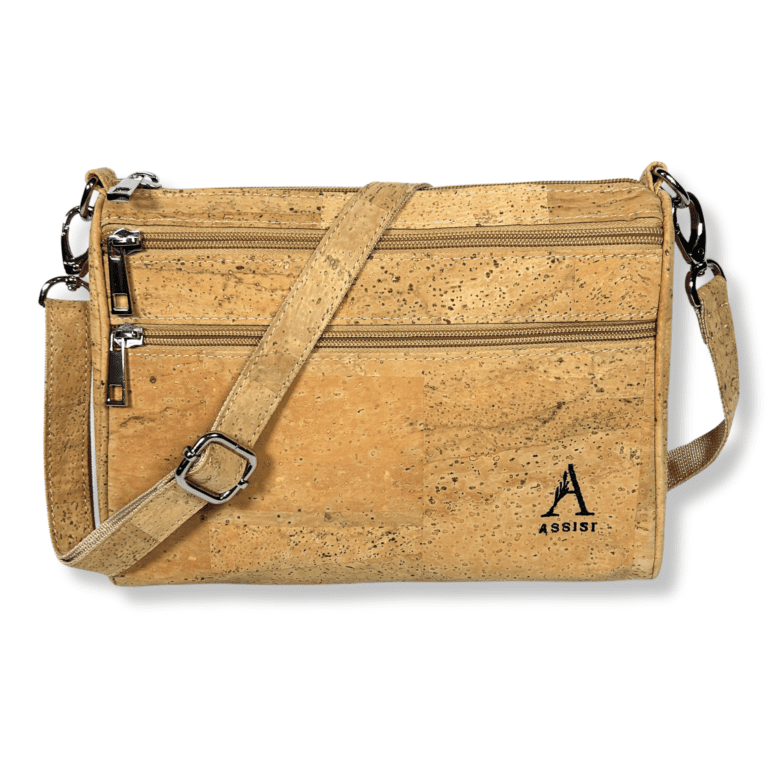
Cork is one of the few materials that holds up whichever way you judge it: how long it lasts, how it behaves in the rain, and what happens to it once you’re finally done with it. If you want to see how it feels in the hand, our cork crossbody bags are the place to start.
Sources
- HZ Cork, Sustainable cork bags guide
- Eve Cork, How durable is cork?
- Primaberry, How cork bags are revolutionising the fashion industry
Enjoyed this? Choose Assisi Style as a preferred source and our articles will show up more often when you search on Google.
Add us on Google