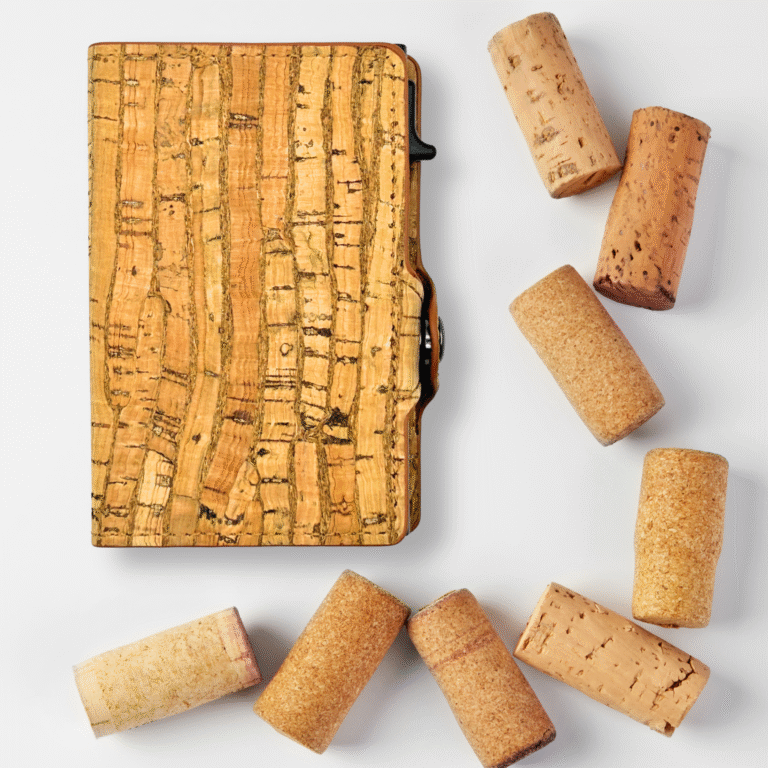
Cork leather is having a moment, and for good reason. It’s lightweight, durable, water resistant, and completely free from animal products, offering everything traditional leather does without the environmental and ethical baggage. Here’s where it comes from, what makes it durable, how it stacks up against real leather, and what happens to it once you’re done with it.
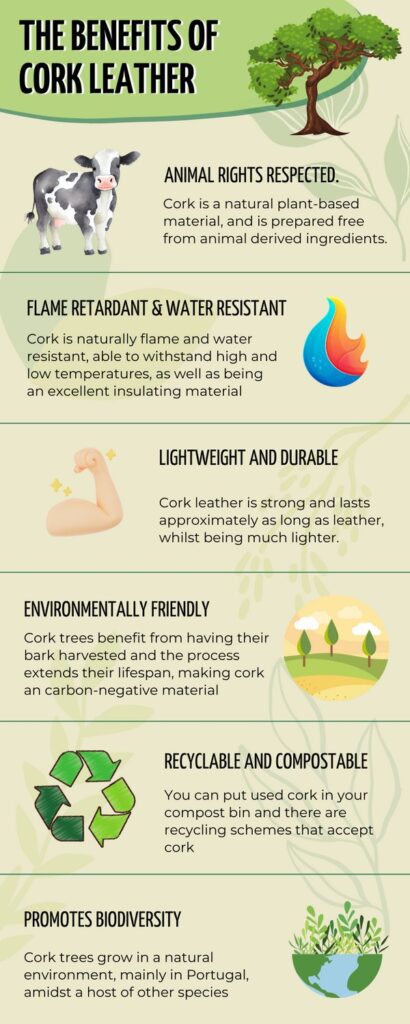
What is cork leather?
Cork leather isn’t a synthetic stand in for the real thing. It’s its own material, made from the bark of cork oak trees, harvested by hand without cutting the tree down, then processed into thin sheets bonded to a fabric backing so it can be cut, stitched, and finished much like animal leather. Underneath, cork is made up of millions of tiny air filled cells coated in suberin, a natural waxy substance that gives it water resistance, plus lignin, which is what makes it strong and springy rather than brittle.
Where does cork come from?
Almost all of it comes from one tree: the cork oak (Quercus suber), which grows across Portugal, Spain, and pockets of the western Mediterranean, in a landscape the Portuguese call montado. Portugal alone supplies roughly half the world’s cork. It’s not just a climate preference either; cork oaks planted outside that region tend to produce bark that isn’t good enough for commercial use.
How is cork harvested?
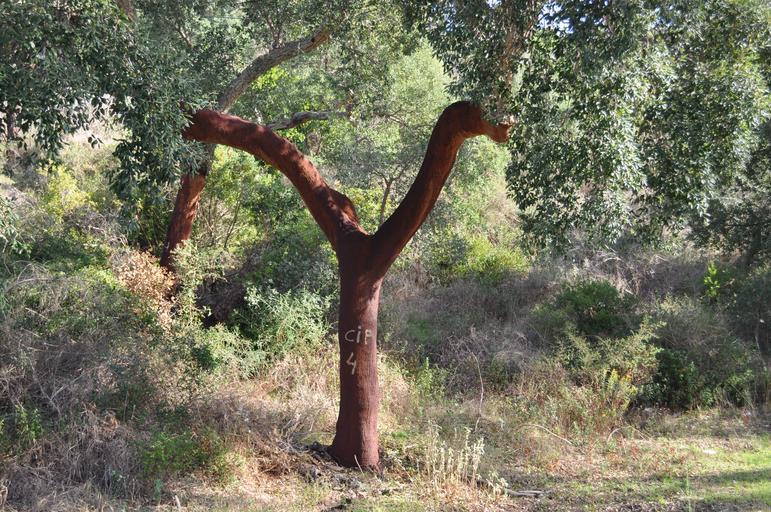
By hand, and only in a short window between late May and August when the bark comes away easiest. Workers cut and peel large sheets from the trunk, the tree stays standing and simply grows new bark over the next several years. A cork oak can live to 200, though harvesting doesn’t start until a tree turns 25, and after that it’s stripped roughly every nine years, around 15 times over its life. Portugal actually protects these trees by law; you can’t legally cut one down without permission.
Why cork holds up so well
Cork’s biggest selling point isn’t any single feature so much as how many boxes it ticks at once. There’s no hide, no tanning chemicals, and no animal by product involved at any stage, which matters if you’re avoiding animal materials for ethical, environmental, or dietary reasons. The suberin that coats each cell also makes it water resistant at a cellular level, so a cork wallet or belt wipes clean without warping or cracking the way untreated leather can.
It’s also surprisingly light for how tough it is; cork’s density is roughly a fifth that of water, and it holds up well against everyday abrasion. Then there’s the harvest itself: the tree is never felled, and it regrows its bark to be stripped again for 200 years or more. Leather production runs the opposite direction. Tanning uses chromium, heavy metals, and dyes that end up in waterways and soil, on top of the emissions from raising cattle in the first place.
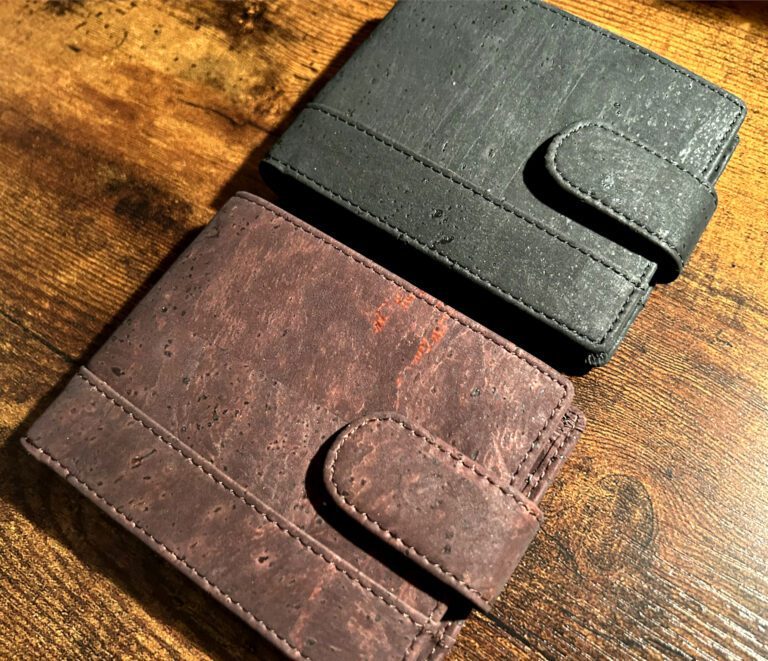
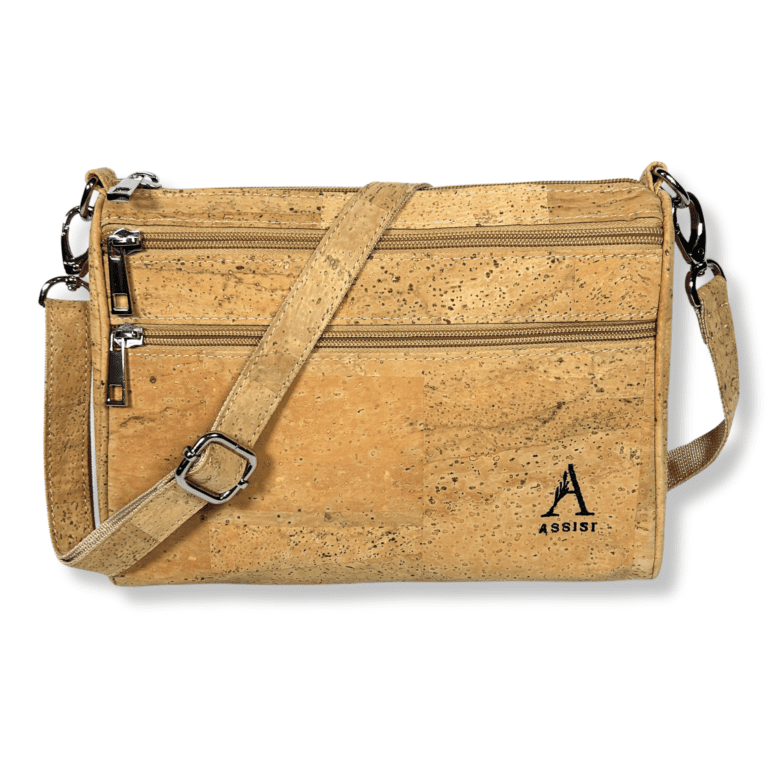
A smaller point worth knowing: no two pieces look the same, since the grain varies with every harvest, so a cork wallet or bag is genuinely one of a kind rather than mass produced to look identical.
Cork leather vs traditional leather
| Cork leather | Animal leather | |
|---|---|---|
| Animal products | None | Yes |
| Water resistance | Natural | Requires treatment |
| Source | Bark from living trees | Animal hides |
| Appearance | Every piece differs | Varies by grade |
| Weight | Very light | Heavier |
Does cork leather actually last?
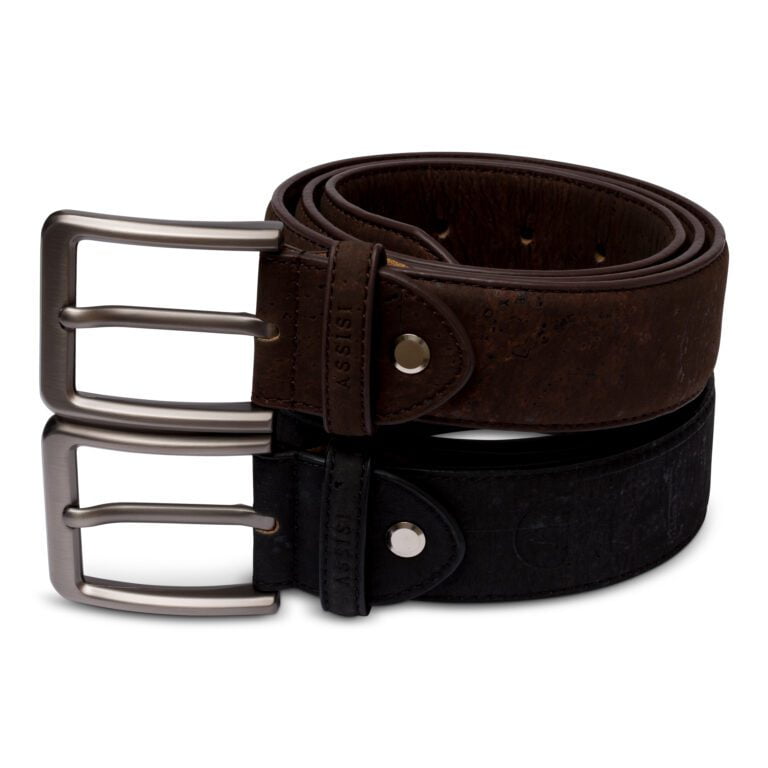
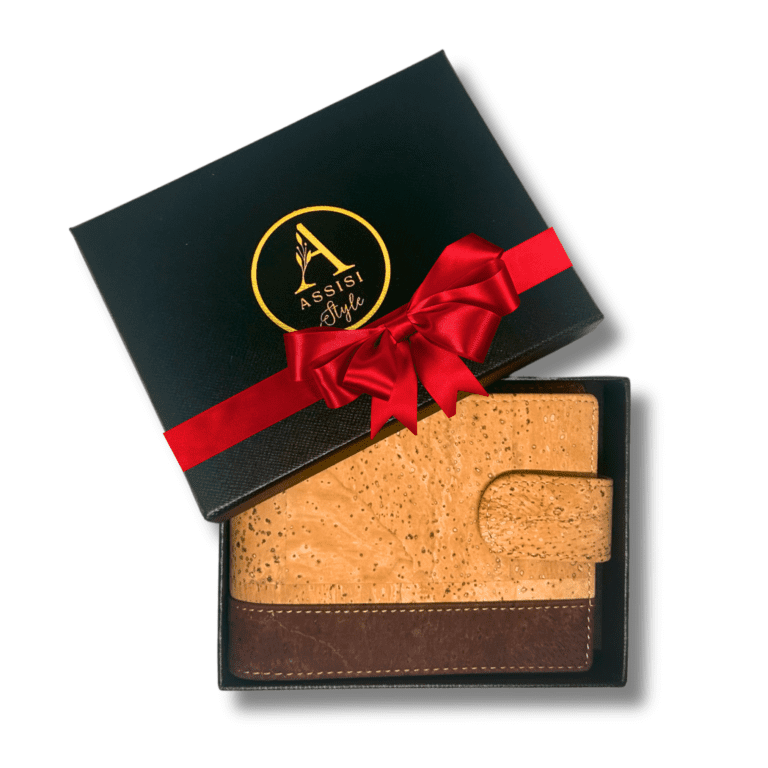
This is usually the first question people ask, understandably. With normal use, yes, for years. It resists abrasion, doesn’t crack with age the way leather can, and doesn’t need conditioning or specialist care. Assisi Style backs every cork belt and wallet with a two year warranty, and honestly the material tends to outlast that comfortably.
What happens to cork at the end of its life?
It is worth being straight about this. Raw cork bark is a natural material, and used wine corks can go through dedicated collection schemes. A cork wallet, belt or bag is different: the cork is bonded to a fabric backing and combined with thread, metal hardware and, on some wallets, an RFID-blocking layer. So a finished cork accessory should not go in the compost, and we do not describe ours as biodegradable. The better end-of-life plan is a long life, which is why our cork belts and wallets come with a two year warranty. Cactus leather is the other plant based alternative worth knowing about, and we compare it with animal leather in a separate guide.
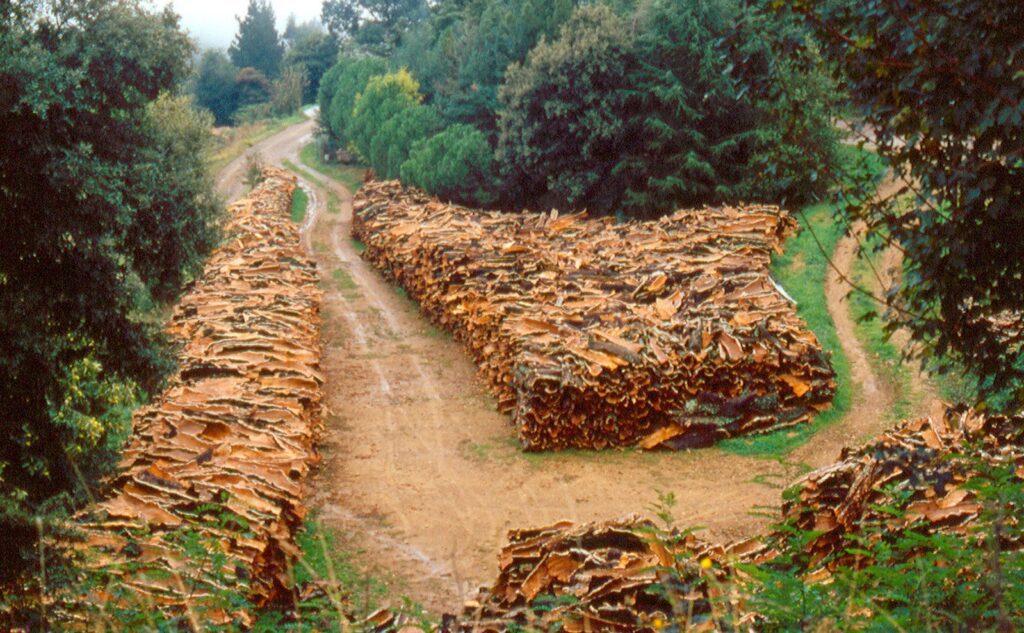
A few other things cork is used for
Fashion aside, cork’s natural properties get used in plenty of other places: wine stoppers obviously, but also heat resistant coasters and flooring. It’s a genuinely useful material in its own right, not something engineered just to imitate leather.
Frequently asked questions
Does cork leather scratch easily?
Not under normal use. Deep abrasion from something sharp will mark it, but that’s true of most materials.
Does cork leather smell?
New cork has a faint, earthy smell that fades within a week or two of regular use.
Can cork leather get wet?
Yes. Surface moisture wipes off easily, though it’s best not to submerge or soak it.
Is cork leather vegan?
Completely. No animal is involved at any point.
How do I clean cork leather?
A slightly damp cloth is all it needs. Skip harsh chemicals, and let it air dry away from direct heat.
Is cork actually sustainable?
The harvest is. The trees are never cut down, they regrow their bark, and cork dust from production is commonly used as fuel. A finished cork accessory also contains a fabric backing, thread and hardware, so it is not biodegradable as a whole. Its strongest point is that it lasts.
Enjoyed this? Choose Assisi Style as a preferred source and our articles will show up more often when you search on Google.
Add us on Google