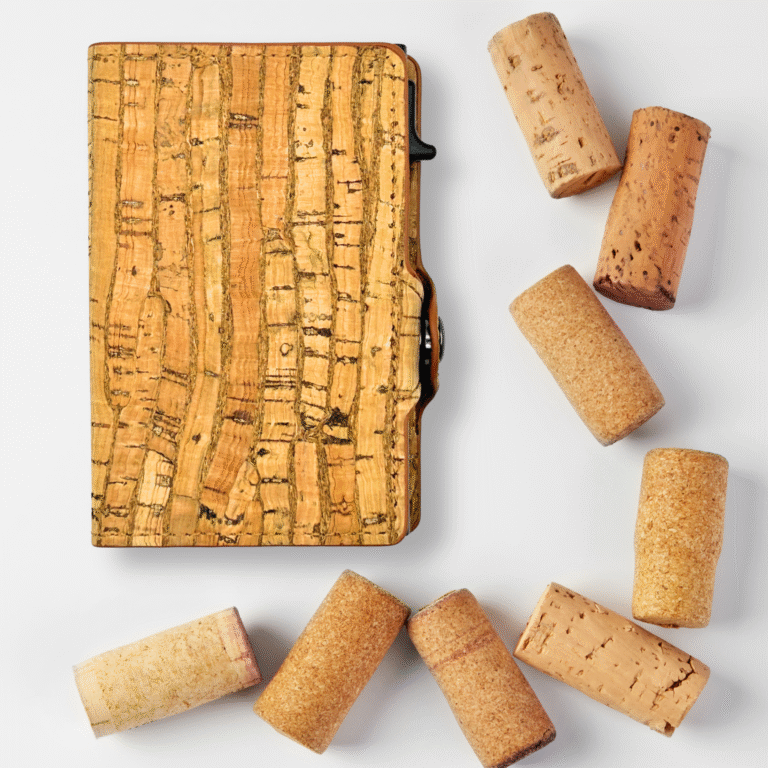
Did you know that cork leathers come with a plethora of incredible benefits? 🌱
Cork leather is having a moment, and for good reason. Lightweight, durable, water-resistant, and completely free from animal products, it offers everything traditional leather does without the environmental and ethical baggage. But beyond the headline claims, what does cork leather actually deliver in day-to-day use? Here’s an honest look at why it’s become the material of choice for anyone who wants accessories that look good and do good.
What is cork leather?
Cork leather isn’t a synthetic imitation of the real thing – it’s a genuinely distinct material with its own set of properties. It’s made from the bark of cork oak trees, which are harvested by hand every nine years without cutting the tree down. The bark is then processed into thin sheets and bonded to a natural fabric backing, creating a flexible, workable material that can be cut, stitched, and finished just like animal leather.
The result is a surface that looks and feels premium, with a natural texture and warmth that plastic-based vegan leathers can’t replicate.
The key benefits of cork leather
1. Completely plant-based and cruelty-free
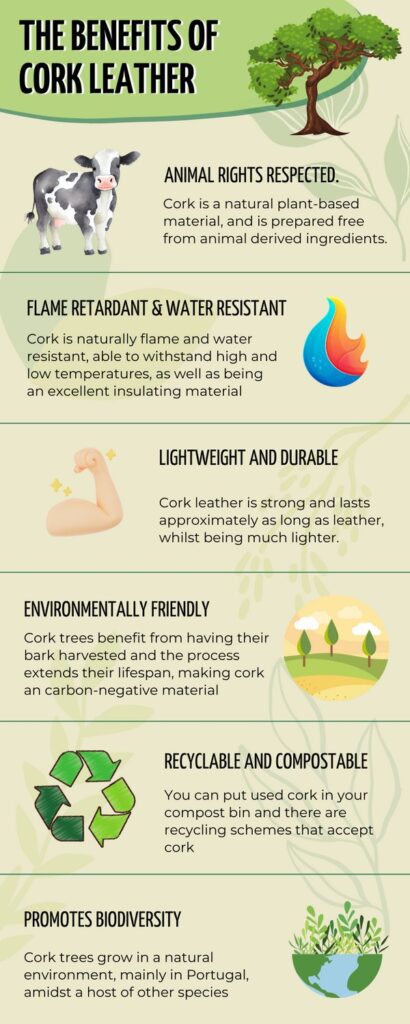
Cork leather contains no animal products at any stage of production. No hides, no tanning chemicals, no by-products from the meat industry. For anyone avoiding animal products, whether for ethical, environmental, or dietary reasons, cork is one of the cleanest material choices available.
2. Naturally water-resistant
Cork contains a waxy natural substance called suberin, which makes it inherently water-resistant. It doesn’t need chemical treatment to repel moisture, that property is built into the material at a cellular level. A cork wallet or belt can be wiped clean with a damp cloth and will not warp, crack, or absorb water the way untreated leather does.
3. Lightweight without sacrificing strength
Cork is one of the lightest solid materials in use today, with a density roughly a fifth that of water. Yet it’s also remarkably strong and resistant to abrasion. A cork belt weighs noticeably less than a leather equivalent of the same size, which makes a real difference in everyday wear comfort.
4. Carbon-negative production
Cork oak forests actively absorb CO₂ from the atmosphere. Crucially, a harvested cork oak absorbs significantly more carbon than an unharvested one, the tree goes into an accelerated growth phase after harvesting, drawing down more carbon as it regenerates its bark. This means that using cork products doesn’t just avoid harm, it actively supports carbon sequestration. Leather production, by contrast, is associated with significant greenhouse gas emissions from both cattle farming and the tanning process.
5. Hypoallergenic and skin-friendly
Cork is naturally hypoallergenic and antimicrobial. It doesn’t harbour bacteria or trigger skin reactions, making it a good choice for anyone with sensitive skin or allergies. Unlike some synthetic vegan leathers, there are no plasticisers or chemical coatings in direct contact with the skin.
6. Unique in appearance
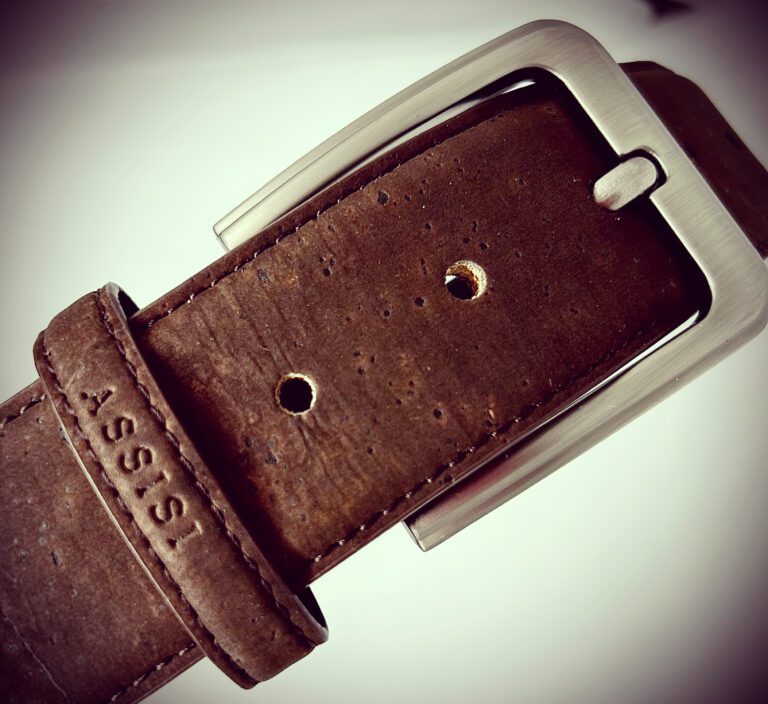
No two pieces of cork look identical. The natural grain and pattern of cork bark varies across every harvest, which means every cork wallet, belt, or bag has a slightly different appearance. If you want an accessory that’s genuinely one of a kind, cork delivers that without paying a premium for bespoke craftsmanship.
7. Biodegradable and recyclable
At the end of its life, cork breaks down naturally. It can be composted at home, used as garden mulch, or taken to cork recycling schemes. This stands in stark contrast to most synthetic vegan leathers, which are plastic-based and will persist in landfill for centuries. Cork is one of the few materials that can genuinely claim to be sustainable across its entire lifecycle from harvest to disposal.
8. Flame retardant
Cork has a naturally low thermal conductivity and does not catch fire easily, making it one of the few natural materials with inherent flame-resistant properties. This doesn’t mean it’s fireproof, but it does mean cork accessories won’t melt or ignite from brief contact with heat the way synthetic materials can.
Cork leather vs traditional leather — a quick comparison
| Cork leather | Animal leather | |
|---|---|---|
| Animal products | None | Yes |
| Water resistance | Natural | Requires treatment |
| Carbon footprint | Carbon-negative | High |
| Biodegradable | Yes | Partially |
| Hypoallergenic | Yes | No |
| Unique appearance | Every piece differs | Varies by grade |
| Weight | Very light | Heavier |
Does cork leather last?
This is the question most people ask first. The honest answer is yes – with normal use, a cork accessory will last for years. The material is resistant to abrasion, doesn’t crack with age the way leather does, and maintains its appearance without conditioning or specialist treatment. Assisi Style backs all cork belts and wallets with a two-year warranty, and the material itself will typically outlast that comfortably.
Frequently asked questions
Does cork leather scratch easily? Cork is resistant to surface scratching under normal use. Deep abrasion from sharp objects will mark it, as it would any material, but everyday wear does not damage the surface.
Does cork leather smell? New cork has a mild, natural earthy scent. This fades within one to two weeks of regular use and is nothing like the chemical smell of synthetic materials.
Can cork leather get wet? Yes, cork is naturally water-resistant. Surface moisture can simply be wiped away. It should not be submerged or left soaking, but rain, spills, and everyday moisture are not a problem.
Is cork leather vegan? Yes, completely. Cork is harvested from tree bark with no animal involvement at any stage.
How do I clean cork leather? Wipe with a slightly damp cloth. Avoid harsh chemicals or abrasive cleaning products. Allow to dry naturally away from direct heat.